
Berkeley gold braces sit in a strange middle ground in modern orthodontics. Mechanically they are identical to standard metal braces — brackets, archwires, and elastic ties applying continuous force to move teeth through bone. The only differences are cosmetic and, for a small subset of patients, medical: the brackets carry a thin layer of 24-karat gold plating instead of a polished stainless-steel finish. Patients still ask about them for two reasons — the warm-toned look reads as intentional rather than clinical, and some adults with nickel sensitivity genuinely need a non-nickel bracket surface.
This guide covers what gold braces actually cost in the East Bay, how long treatment runs, and the specific situations where gold makes clinical or personal sense. If you are weighing your orthodontic options more broadly, our Invisalign vs. braces for adults breakdown compares appliance types from every angle.
What Are Berkeley Gold Braces, Exactly?
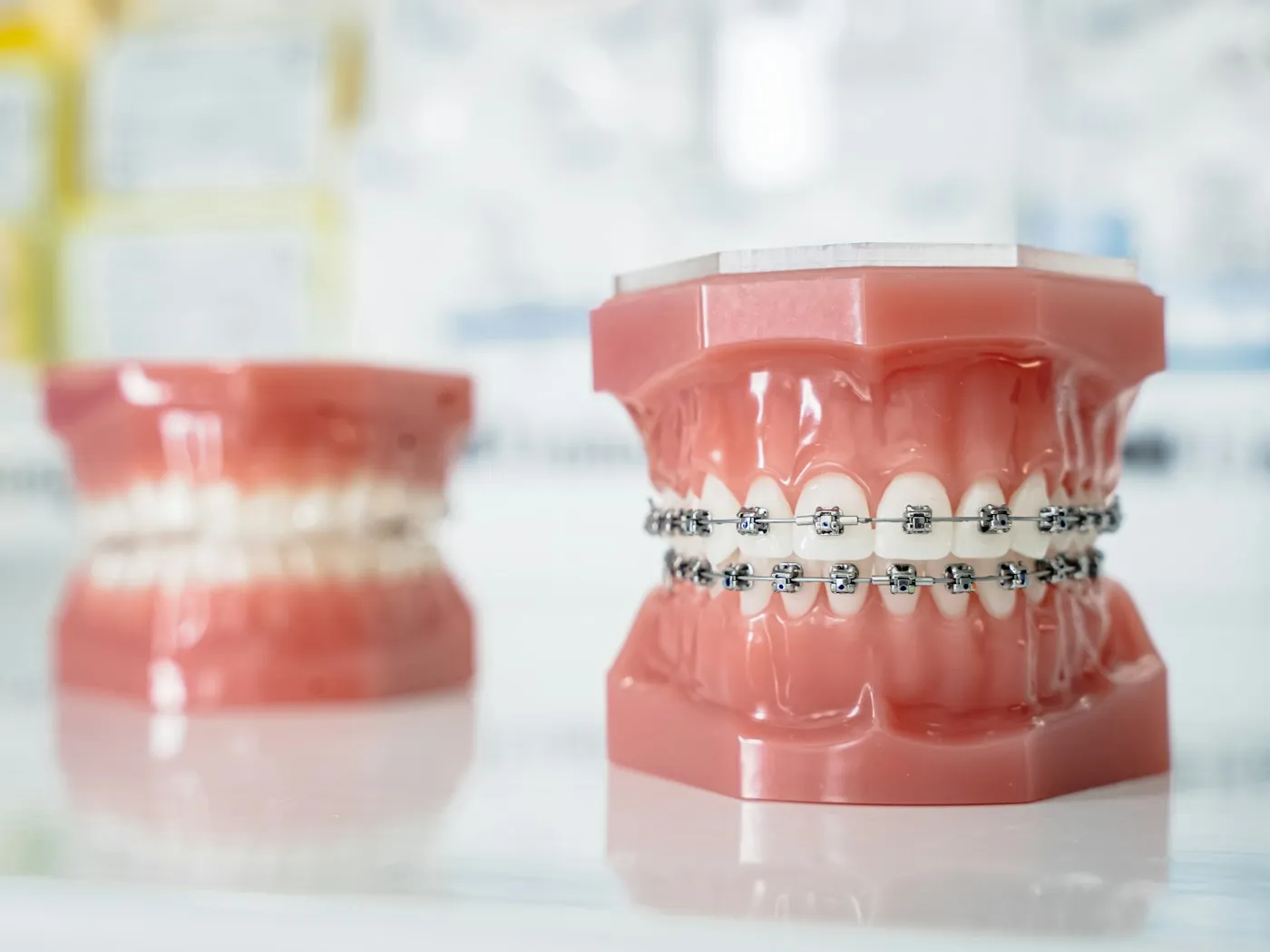
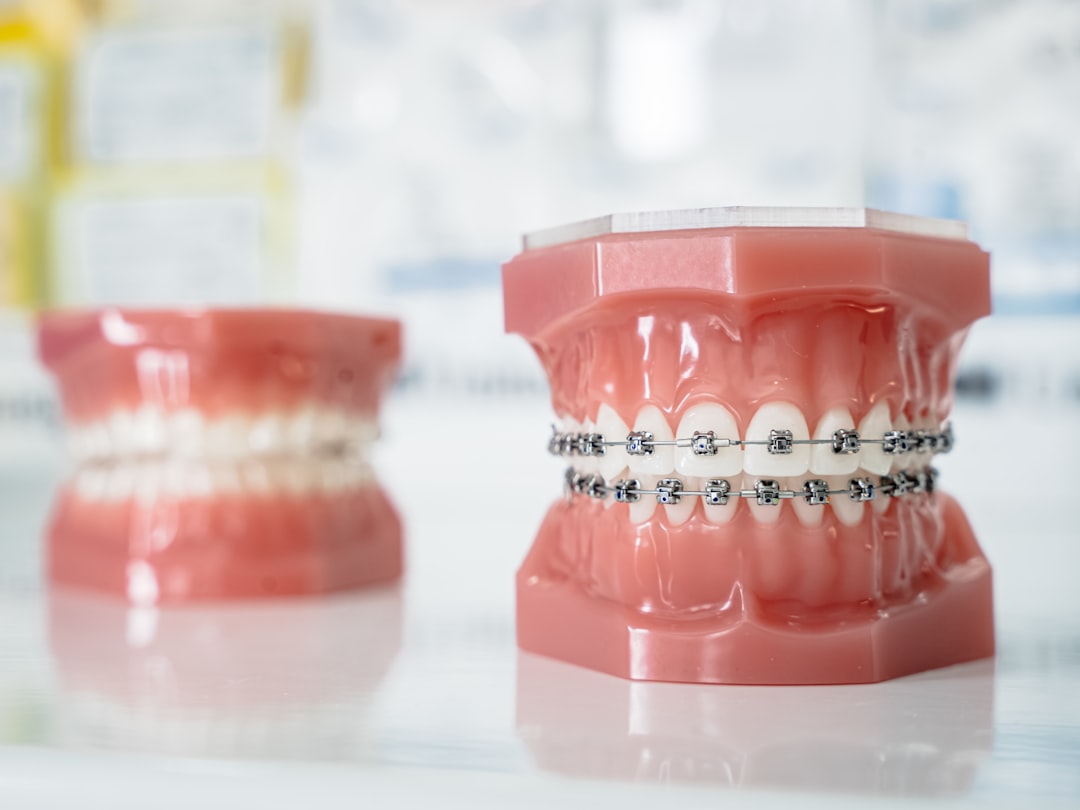
Gold braces are traditional fixed orthodontic appliances with one modification: the metal brackets bonded to each tooth are plated in gold rather than left as bare stainless steel. The plating is typically 24-karat gold laid down over a stainless-steel or nickel-free base. Thickness is measured in microns — enough to give the bracket a consistent warm color, not enough to change the bracket's structural strength.
Everything else works the same as any other set of braces. A flexible archwire threads through slots in the brackets and delivers constant, gentle pressure. Elastic ties or self-ligating clips hold the wire in place. Every six to eight weeks your provider tightens or swaps the wire, and the teeth walk through bone toward the planned end position. According to the American Association of Orthodontists, the bracket surface material has no effect on the biological mechanism of tooth movement.
How Much Do Berkeley Gold Braces Cost in 2026?
In the East Bay this year, gold braces for adults run $4,700 to $8,500 for a full course of treatment. The wide range reflects case complexity, not markup. A straightforward crowding case in a compliant adult sits near the bottom of the range; a complex bite correction with elastics, extractions, or lengthy finishing runs to the top.
What Drives the Price Above Standard Metal Braces
The gold plating itself adds $700 to $1,500 versus polished stainless steel. That premium covers the bracket manufacturing cost — bulk gold-plated brackets are produced by fewer suppliers and cost more per unit than commodity steel. Some cases also use gold-plated archwires, which add roughly $200–$400 more depending on how many wire changes the case requires.
What does not change: the number of appointments, the retention plan, the cost of records and imaging, or the length of treatment. If your provider quotes a much higher gold-braces premium than a $1,500 ceiling, ask what specifically it covers. Insurance orthodontic benefits — usually a lifetime maximum around $1,500–$3,000 — apply the same way to gold braces as to standard braces, so the out-of-pocket difference is roughly the plating premium minus any small change in your covered amount.
How Long Does Berkeley Gold Braces Treatment Take?
Treatment length depends almost entirely on the case, not the bracket material. For adults, expect:
- Mild crowding or spacing: 12–15 months
- Moderate crowding with mild bite correction: 15–20 months
- Complex cases (deep overbite, crossbite, significant rotation, extractions): 20–30 months
Adult treatment tends to run 20–30% longer than teen treatment because adult bone is denser and remodels more slowly. If you have an overbite driving the timeline, our guide on how to fix an overbite walks through the specific movements and why they can add six to twelve months to a case regardless of appliance.
After active treatment, retention is lifelong. Most patients wear a fixed lingual retainer behind the front teeth plus a removable clear retainer at night. Retention is not optional — teeth drift back toward their original position without it, and that drift can undo years of movement in months.
Who's a Good Candidate for Gold Braces in Berkeley?
Three groups tend to be the right fit:
Patients with documented nickel sensitivity. Roughly 10–15% of adults have some degree of nickel allergy, and standard stainless-steel brackets contain nickel. A gold-plated bracket surface separates the nickel base from the oral tissues and, for most sensitive patients, eliminates the reaction. If you have had contact dermatitis from jewelry, ask your provider to test or reference nickel-free options directly.
Adults who want a distinctive, warm-toned look. This sounds superficial and it is not. Silver-toned brackets read as clinical or juvenile to many adult patients. Gold plating reads as intentional — a decision, not a compromise. Patients who tell us they would rather look like they made a style choice than like they are stuck with hardware often prefer it.
Complex cases that genuinely need fixed appliances. Severe rotations, large vertical movements, extraction-space closure, and jaw-discrepancy work all finish more predictably with fixed brackets than with clear aligners. If your case needs braces anyway, choosing gold instead of steel changes nothing about the treatment plan.
When Gold Braces Are Not the Right Fit
If your case can be solved with Invisalign in Berkeley, that is usually the better option for adults — no dietary restrictions, easier hygiene, less impact on professional appearance. If cost is a hard constraint, standard metal braces do the same clinical work for $700–$1,500 less. And if you are prone to grinding or clenching, the extra thickness of any bracket can worsen bruxism symptoms and may need to be managed alongside a custom night guard during treatment.
Gold Braces vs. Metal, Ceramic, and Invisalign — What Each One Solves
The four common adult options in Berkeley break down like this:
- Standard metal braces — cheapest, most predictable for complex cases, most visible.
- Gold-plated braces — same clinical performance as metal, warmer-toned appearance, nickel-free surface, $700–$1,500 premium.
- Ceramic braces — tooth-colored brackets, less visible than metal, more prone to breakage and staining at the elastics.
- Invisalign clear aligners — nearly invisible, removable for meals and hygiene, requires 20–22 hours daily wear, limited for the most complex movements.
For most adults with mild to moderate crowding, Invisalign or ceramic braces cover the case. Gold braces come into their own when the patient wants a distinctive look, has nickel sensitivity, or needs fixed appliances for a movement Invisalign cannot handle predictably.
What to Expect During Gold Braces Treatment
The first appointment is bonding day — about 60–90 minutes to etch the enamel and attach each bracket. Expect two to four days of soreness after bonding and after each adjustment. Over-the-counter pain relievers manage it for almost everyone; orthodontic wax handles cheek and lip irritation from the brackets themselves.
Hygiene takes real work. Plaque collects along the bracket edges where the toothbrush cannot reach, and untreated plaque causes the white-spot lesions and gum inflammation that undo cosmetic gains. We schedule cleanings every three months during treatment instead of every six, and we teach a specific brushing and interdental technique at the first appointment. If dental anxiety has kept you from committing to orthodontics before, our overview of sedation dentistry for anxious patients in Berkeley covers the amenities that make longer appointments manageable.
At the end of active treatment, we take final records, remove the brackets — a painless 30-minute appointment — polish off the bonding cement, and fit your retainers. Total in-chair time across a two-year case runs 15–25 hours spread across 20–25 visits.
Frequently Asked Questions About Berkeley Gold Braces
- Are Berkeley gold braces more expensive than regular metal braces? Yes, roughly $700–$1,500 more for the plating premium. Wires, appointments, and retention cost the same.
- Are gold braces made of real gold? The brackets are stainless steel or nickel-free alloy with a thin 24-karat gold plating. Real gold, thin layer, structural strength from the base metal.
- Do gold braces stain teeth? The plating does not. Plaque along bracket edges does — the fix is disciplined hygiene and three-month cleanings during treatment.
- Can adults get gold braces? Yes, and adults are the more common patient. Nickel sensitivity, a preference for a distinctive look, and complex cases that need fixed brackets all point toward gold.
- Do gold braces work faster than regular braces? No. Plating affects appearance, not biology. A typical adult case runs 12–24 months regardless of bracket surface.
If you are weighing Berkeley gold braces against Invisalign or standard metal, the right next step is a consultation with digital records — a scan, a bite analysis, and a treatment plan you can compare across options. Our Berkeley office sees patients from across the East Bay for orthodontic evaluations, and we're happy to walk through the tradeoffs before you commit to anything. Reach out to schedule.