

Oral Cancer Screening in Berkeley, CA
Early Detection Saves Lives — Included With Every Exam
A painless, life-saving examination included with every routine dental visit at Acorn Family Dental Care.
Oral cancer is one of the most treatable forms of cancer when caught early, yet it remains one of the most dangerous when diagnosed late. At Acorn Family Dental Care in Berkeley, Dr. Teah Nguyen performs a thorough oral cancer screening as part of every routine dental exam, because early detection truly saves lives. The screening takes just a few minutes, is completely painless, and could be the most important part of your dental visit.
Approximately 58,000 Americans are diagnosed with oral and oropharyngeal cancer each year, and the disease claims roughly 12,000 lives annually. The five-year survival rate for oral cancer detected in its earliest stages is approximately 84 percent. When detected late, that number drops dramatically. Regular screenings at your dentist's office are your best defense. Acorn Family Dental Care proudly serves patients from Berkeley, Albany, El Cerrito, Oakland, Kensington, Emeryville, and the greater East Bay.
What Is Oral Cancer?
Oral cancer refers to cancers that develop in the tissues of the mouth or the back of the throat (oropharynx). It can occur in several locations including the tongue (the most common site), the floor of the mouth, the gums, inner cheeks, lips, the roof of the mouth, and the tonsils and back of the throat.
Most oral cancers are squamous cell carcinomas that can grow locally and, if undetected, spread to the lymph nodes and eventually to other parts of the body. The key to successful treatment is early detection — which is why routine oral cancer screening at your dental office is so critical.
Why Screening at Your Dentist Matters
Oral cancer can develop and progress without causing noticeable pain or obvious symptoms. Unlike some other cancers, there is no widely available home test or standard blood test. Your dentist is the healthcare professional best positioned to detect oral cancer early.
When found early (localized), 5-year survival is ~84%. After spreading to lymph nodes, it drops to ~69%. At a distant stage, ~40%.
Adds just a few minutes to your regular exam. No pain, needles, or special preparation.
Identifies leukoplakia (white patches) and erythroplakia (red patches) before they develop into cancer.
Oral cancer screening is a standard part of every comprehensive dental exam — no extra request or cost for basic visual screening.
Expert Care
Personalized treatment by Dr. Nguyen
What Happens During an Oral Cancer Screening?
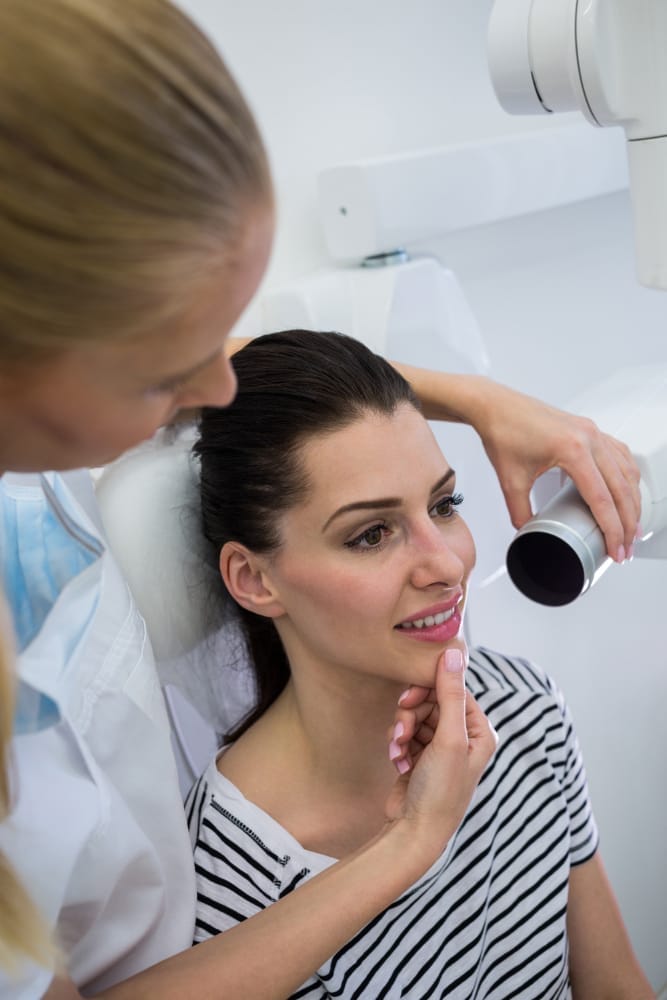
An oral cancer screening at Acorn Family Dental Care is a quick, non-invasive examination performed by Dr. Nguyen during your regular dental visit:
Using bright lighting and dental mirrors, Dr. Nguyen carefully inspects all soft tissues — lips, gums, inner cheeks, tongue (top, bottom, sides), floor of the mouth, roof of the mouth, and back of the throat — looking for unusual sores, white or red patches, thickened tissue, lumps, or other abnormalities.
Dr. Nguyen gently feels the tissues of the mouth, jaw, and neck to check for lumps, hardened areas, or swollen lymph nodes. The lymph nodes in the neck are often the first place oral cancer spreads. She also evaluates the face and neck externally for asymmetry or swelling.
Specialized screening tools using special lights or dyes may be used to highlight abnormal tissue not visible to the naked eye under normal lighting. These supplement (but don't replace) the clinical exam.
Depending on the finding, the area will be documented and rechecked in 2-3 weeks (many lesions resolve on their own). If it doesn't resolve, Dr. Nguyen will refer you to an oral medicine specialist for further evaluation and biopsy — the only definitive way to confirm or rule out cancer.

Expert Care
Personalized treatment by Dr. Nguyen
Oral Cancer Risk Factors
While oral cancer can affect anyone, certain factors significantly increase your risk. Understanding them helps you make informed decisions about your health:
The single greatest risk factor. Tobacco users are 6x more likely to develop oral cancer. Risk increases with amount and duration of use.
The second major risk factor. Combined with tobacco use, risk is potentially 15x higher than non-users of either substance (synergistic effect).
HPV-16 has become a leading cause of oropharyngeal cancers, increasing especially among younger adults with no traditional risk factors. HPV-related cancers tend to have a better prognosis.
Prolonged, unprotected exposure increases risk of lip cancer, particularly the lower lip.
Most common in people over 40 (though HPV cases are increasing in younger adults). Men are ~2x more likely. Poor nutrition, previous oral cancer, and weakened immune systems also increase risk.
Important: Approximately 25% of oral cancers occur in people with no known risk factors. This is why screening everyone, regardless of perceived risk, is essential.
Early Warning Signs of Oral Cancer
Between dental visits, be aware of changes in your mouth and seek evaluation promptly if any of these symptoms persist for more than two weeks:
Any mouth sore or ulcer that doesn't resolve within 2-3 weeks — the most common early sign.
Leukoplakia (white) or erythroplakia (red) on gums, tongue, tonsils, or mouth lining can be precancerous.
Unexplained lump, bump, rough spot, crust, or eroded area on lips, gums, cheek, or inside the mouth.
Chronic sore throat, hoarseness, or feeling that something is caught in the throat that won't go away.
Oral cancers can affect muscles and nerves controlling chewing, swallowing, and jaw movement.
Unexplained numbness, tenderness, or pain in face/mouth/neck/ear. Unexplained bleeding without trauma. Ear pain without infection.
If you notice any of these signs lasting more than two weeks, do not wait for your next scheduled appointment. Call (510) 848-0114 to schedule an evaluation. Most are caused by conditions other than cancer, but prompt evaluation is essential.
Expert Care
Personalized treatment by Dr. Nguyen
Oral Cancer Survival Rates: Why Early Detection Matters
The stage at which oral cancer is detected has a profound impact on treatment outcomes:
Localized (Early)
Least invasive treatment — may require only surgery. Found through routine dental screening.
Regional (Lymph Nodes)
Surgery + radiation, possible chemo. Found through clinical exam and imaging.
Distant (Metastasized)
Aggressive multi-modal treatment. Often symptomatic by this stage.
These statistics make a powerful case for regular screening. Finding oral cancer early can mean the difference between a minimally invasive treatment with an excellent prognosis and aggressive, life-altering treatment with a significantly reduced survival rate.
Ready to get started?
Schedule a consultation and take the first step toward better oral health.
Expert Care
Personalized treatment by Dr. Nguyen
How to Reduce Your Risk of Oral Cancer
While you cannot eliminate all risk, these evidence-based steps can significantly reduce your chances:
Quit Tobacco
The single most impactful step. Risk decreases significantly after quitting and continues to decline over time.
Limit Alcohol
Moderate or eliminate consumption. No more than 1 drink/day for women or 2 for men. Avoid combining alcohol with tobacco.
Eat a Nutrient-Rich Diet
Fruits, vegetables, and antioxidants may offer protective benefits. Leafy greens, berries, citrus, and foods high in vitamins A, C, and E. Read more about cancer-fighting foods.
Get the HPV Vaccine & Protect Lips
Gardasil 9 is highly effective at preventing HPV strains linked to oral cancer (recommended for preteens, available up to age 45). Use lip balm with SPF 30+ and wear a wide-brimmed hat for sun protection.
Good Oral Hygiene & Regular Screenings
Maintain regular brushing, flossing, and dental checkups. Chronic irritation from poor oral health may contribute to cancer risk. Twice-yearly exams give you the best chance of catching changes early.
Who Should Get an Oral Cancer Screening?
The short answer: everyone. Oral cancer screening should be a routine part of every dental exam for every patient. However, screening is especially critical if you:
Even if none of these risk factors apply, remember that 1 in 4 oral cancers occurs in people with no known risk factors. A few minutes of screening at each dental visit is a small investment for potentially life-saving early detection.
Frequently Asked Questions About Oral Cancer Screening
Oral Cancer Screening for Berkeley, Albany, El Cerrito, Oakland & the East Bay
Acorn Family Dental Care provides thorough oral cancer screening as part of every dental exam at our Berkeley office at 2999 Regent St #302. Dr. Teah Nguyen is committed to protecting the oral health and overall well-being of patients from Berkeley, Albany, El Cerrito, Kensington, Oakland, Emeryville, Richmond, and surrounding East Bay communities. An oral cancer screening takes just a few minutes and could save your life.
Schedule Your Oral Cancer Screening Today
Early detection is the most powerful tool against oral cancer. If it has been more than six months since your last dental exam, or if you have noticed any persistent changes in your mouth, schedule an appointment today. Your screening is included with your comprehensive dental exam. New patients are always welcome.
Related Articles
Expert insights and tips from our dental team
 oral cancer
Jul 20, 2024
Foods That Lower Your Oral Cancer Risk (Backed by Research)
Fish, leafy greens, and tomatoes contain nutrients that fight oral cancer. Learn which foods reduce risk, which cooking methods preserve their benefits.
Read article oral health
May 6, 2026
What Your Dentist Can Tell About Your Health
Your mouth reveals signs of diabetes, heart disease, and cancer before symptoms appear. Learn what a routine dental exam can uncover about your overall health.
Read article fluoride
Mar 27, 2024
Too Much Fluoride? Signs of Fluorosis and Safe Levels
Fluoride prevents cavities, but excess causes fluorosis and health risks. Learn the safe daily limits for adults and children and signs you're getting too much.
Read article