

Porcelain Inlays & Onlays in Berkeley, CA
Custom Lab-Fabricated Restorations That Preserve More Tooth Structure Than Crowns
Custom lab-crafted porcelain restorations that preserve more natural tooth than crowns and outlast fillings.
When a tooth has too much damage for a simple composite filling but not enough to require a full dental crown, there is an ideal middle ground: porcelain inlays and onlays. Sometimes called indirect fillings or partial crowns, these custom-fabricated restorations repair moderate decay and damage while preserving significantly more of your natural tooth structure than a crown. They are stronger and longer-lasting than composite fillings, beautifully tooth-colored, and precisely fitted using advanced digital technology.
At Acorn Family Dental Care in Berkeley, Dr. Teah Nguyen uses high-quality porcelain and ceramic materials to create custom inlays and onlays that restore both the strength and the appearance of damaged teeth. This conservative approach reflects our commitment to preserving as much healthy tooth structure as possible while providing durable, long-lasting results. We serve patients throughout Berkeley, Albany, El Cerrito, Oakland, Kensington, Emeryville, Orinda, and the greater East Bay.
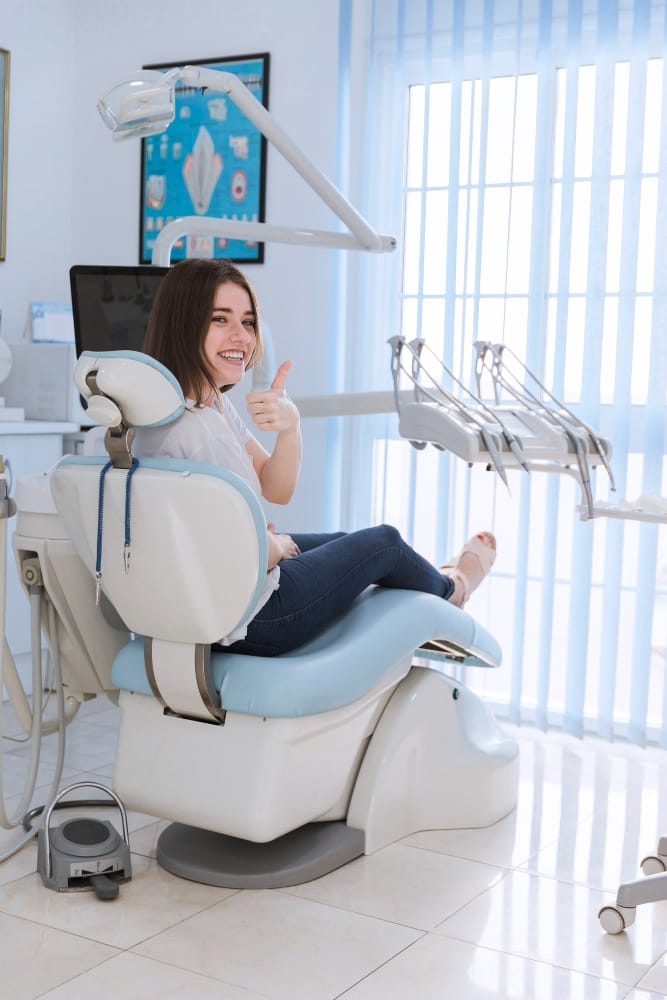
What Are Dental Inlays and Onlays?
Inlays and onlays are custom-made restorations fabricated in a dental laboratory and then bonded to the damaged tooth. Unlike a direct filling (which is placed and shaped inside your mouth), inlays and onlays are created outside the mouth from a precise impression or digital scan of your tooth, resulting in an exceptionally accurate fit and superior strength.
An inlay restores the area within the cusps (the raised points on the chewing surface) of a back tooth. It fits precisely into the grooves and valleys, replacing the damaged portion without covering any of the cusps. Used when damage is contained within the interior of the tooth.
An onlay is larger than an inlay and extends over one or more cusps. Sometimes called a partial crown, it covers a portion of the biting surface while still preserving healthy tooth structure that a full crown would remove. Used when cusps are damaged or weakened.
Key distinction: An inlay fits inside the cusps. An onlay covers one or more cusps. Both are bonded to the tooth and restore its strength and shape, but they do so with the minimum amount of tooth removal necessary.
Expert Care
Personalized treatment by Dr. Nguyen
Expert Care
Personalized treatment by Dr. Nguyen
When Are Inlays and Onlays Recommended?
Dr. Nguyen may recommend a porcelain inlay or onlay in the following situations:
Ready to get started?
Schedule a consultation and take the first step toward better oral health.
Inlays & Onlays vs. Fillings vs. Crowns: Choosing the Right Restoration
One of the most common questions patients ask is how inlays and onlays compare to fillings and crowns:
| Feature | Composite Filling | Porcelain Inlay / Onlay | Dental Crown |
|---|---|---|---|
| Best For | Small to moderate cavities | Moderate damage; too large for filling, too small for crown | Severe damage, large fractures, root canal teeth |
| Tooth Removal | Minimal — only decayed area | Moderate — less than a crown | Most — entire outer surface reduced |
| Fabrication | Direct (placed in mouth) | Indirect (lab-made from impression) | Indirect (lab-made from impression) |
| Strength | Good for small restorations | Very strong — reinforces tooth | Strongest — full encasement |
| Lifespan | 5-10 years | 10-20+ years | 10-30 years (material dependent) |
| Aesthetics | Tooth-colored; can stain over time | Excellent; porcelain resists staining | Excellent (porcelain/zirconia) |
| Appointments | 1 visit | Typically 2 visits | Typically 2 visits |
| Tooth Preservation | Most conservative | Conservative — preserves healthy cusps | Least conservative |
| Cost | Lowest | Moderate (between filling and crown) | Highest |
In summary: a composite filling is ideal for small cavities, a porcelain inlay or onlay is the optimal choice for moderate damage when you want to preserve as much natural tooth as possible, and a dental crown is necessary when the damage is severe enough to require full coverage. Dr. Nguyen always recommends the most conservative restoration that will provide lasting results.
Inlay and Onlay Materials
Several materials can be used to fabricate inlays and onlays. At Acorn Family Dental Care, we primarily use porcelain and advanced ceramics:
The most natural-looking result. Translucent quality mimics natural enamel, custom shade-matched, highly resistant to staining, and biocompatible.
High-strength glass ceramic combining beauty with significantly greater strength. Excellent for back teeth under heavy chewing forces. One of the most popular choices in modern restorative dentistry.
Lab-fabricated from tooth-colored resin. Less expensive than porcelain but also less durable and more prone to staining. Appropriate for more affordable options in less demanding areas.
Longest track record of any indirect restoration. Extremely durable, gentle on opposing teeth, requires least tooth reduction. Less popular cosmetically but outstanding for back molars where longevity is paramount.
Expert Care
Personalized treatment by Dr. Nguyen
The Inlay and Onlay Procedure: Step by Step
The process of placing a porcelain inlay or onlay typically requires two appointments:
Dr. Nguyen numbs the tooth, removes all decay and old filling material, and carefully shapes the tooth. Unlike crown preparation, all healthy tooth structure is preserved.
A detailed digital scan of the prepared tooth, surrounding teeth, and your bite is taken and sent to a dental laboratory where a skilled ceramist fabricates your custom restoration.
A temporary filling protects the tooth while the permanent inlay or onlay is being fabricated, typically one to two weeks.
The restoration is trial-fitted to verify fit, contour, and color match. Then bonded using a strong dental adhesive that adds structural strength to the tooth.
Your bite is carefully checked and adjusted for comfort. The result is a smooth, natural-looking, precisely fitted restoration that restores the tooth to full function.
Expert Care
Personalized treatment by Dr. Nguyen
Benefits of Porcelain Inlays and Onlays
Requires less tooth removal than crowns. More natural tooth means better long-term prognosis and more options if re-treatment is ever needed.
Lab-fabricated from a single block of material, they reinforce the remaining tooth structure rather than simply filling a space.
Digital impressions result in incredibly precise fit. A tighter marginal seal reduces the risk of recurrent decay.
Routinely last 10 to 20 years or longer with proper care, compared to 5 to 10 years for composite fillings.
Porcelain matches the color and translucency of natural enamel. Unlike composite, it resists staining from coffee, tea, and wine.
No metal components and no risk of the corrosion sometimes associated with amalgam fillings.
The bonding process chemically adheres the restoration to the tooth, and the rigid porcelain acts like a splint, holding the tooth together and distributing chewing forces evenly.
Caring for Your Inlays and Onlays
Porcelain inlays and onlays require the same care as your natural teeth:
With a soft-bristled toothbrush and fluoride toothpaste. Pay attention to the margins where the restoration meets the natural tooth.
Remove plaque and food particles from between teeth and around restoration margins. A water flosser is an excellent complement.
Do not chew ice, hard candy, pen caps, or other non-food objects that could crack the porcelain.
A custom night guard protects your inlays, onlays, and natural teeth from excessive grinding forces.
Keep regular dental checkups — Dr. Nguyen examines your restorations at every visit to ensure margins remain sealed and the restoration is intact.
Inlay and Onlay Cost & Insurance
Cost Factors
- • Material: Porcelain and e.max typically more expensive than indirect composite
- • Size & complexity: Larger onlays covering multiple cusps cost more
- • Tooth location: Back teeth (premolars and molars) are most common
- • Number needed: Multiple restorations may be more efficient when done together
Insurance & Financing
- • Most plans classify inlays/onlays as major restorative: 50-80% coverage
- • Membership plan for uninsured patients
- • Flexible financing options available
- • Cherry patient financing — apply in minutes
- • Call (510) 848-0114 for a personalized estimate
Frequently Asked Questions About Inlays and Onlays
Porcelain Inlays & Onlays for Patients in Berkeley, Albany, El Cerrito, Oakland, Orinda & the East Bay
If you have moderate tooth damage, a failing filling, or want to upgrade from old amalgam restorations, porcelain inlays and onlays may be the ideal solution. Acorn Family Dental Care provides custom inlay and onlay services at our Berkeley office at 2999 Regent St #302, serving patients from Albany, El Cerrito, Kensington, Oakland, Emeryville, Orinda, and Richmond.
Contact Acorn Family Dental Care at (510) 848-0114 or use our online booking form to schedule your consultation with Dr. Teah Nguyen. We will evaluate your tooth, explain your restoration options (filling, inlay, onlay, or crown), and recommend the most conservative, effective solution. New patients are always welcome.
Related Articles
Expert insights and tips from our dental team
 dental fillings
Dec 25, 2024
Filling Still Hurts? Why Pain After a Filling Is Normal
Tooth pain after a new filling is common but should fade in days. Learn when post-filling sensitivity is normal and when it means you need to see your dentist.
Read article dentures
Dec 30, 2017
Getting Dentures? What to Know Before You Start
Full vs. partial, fit, cost, and daily care — everything you need to know before getting dentures so you feel confident and comfortable from day one.
Read article dental crowns
Oct 20, 2017
Dental Crown Fell Off? Here's What to Do Right Now
Don't panic. Save the crown, protect the exposed tooth, and call your dentist. Follow these step-by-step instructions to get your crown recemented fast.
Read article