
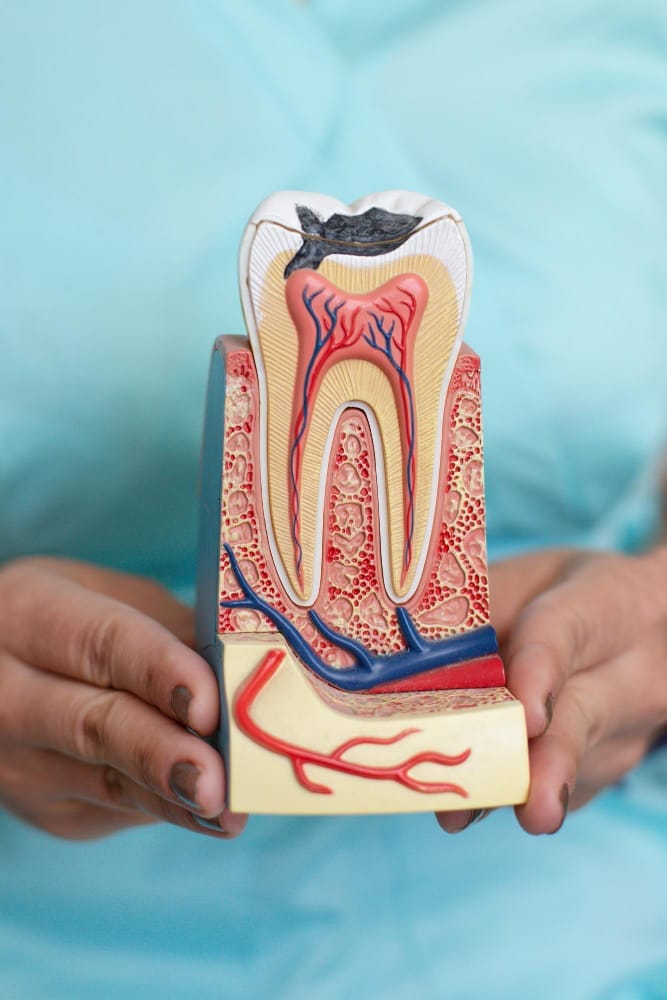

Regenerative endodontic treatment represents the cutting edge of modern dentistry—a revolutionary approach that goes beyond simply removing infected tissue. Instead of filling a dead tooth, regenerative treatment stimulates the body's natural healing capacity to restore vitality to teeth with dead or dying pulps.
At Acorn Family Dental Care, Dr. Teah Nguyen stays at the forefront of endodontic innovation and can discuss whether regenerative treatment is appropriate for your situation. This approach is particularly beneficial for young patients with immature tooth roots, where continued root development is critical for long-term tooth strength.
Success rate of regenerative endodontic treatment
Restored rather than replaced with inert material
Best candidates with immature tooth roots
What Is Regenerative Endodontic Treatment?
Regenerative endodontic treatment (RET) is an innovative procedure designed to stimulate the growth of new tissue inside the root canal system. Rather than removing all pulp tissue and filling the tooth with inert gutta-percha (as in conventional root canal therapy), regenerative treatment attempts to:
- • Restore blood supply to the tooth root (revascularization)
- • Promote growth of new tissue inside the root canal
- • Allow continued root development in young patients
- • Restore tooth vitality and natural function
Traditional Root Canal Therapy
Approach:
Remove all pulp tissue and fill with gutta-percha
Result:
Dead tooth that is no longer vital but functions normally with a crown
Long-term concern:
Immature roots may not complete development; tooth may be more brittle
Regenerative Endodontic Treatment
Approach:
Stimulate body's healing to regrow vital tissue
Result:
Restored tooth vitality with regenerated tissue and blood supply
Long-term benefit:
Immature roots can continue developing; stronger, healthier tooth long-term
How Regenerative Endodontic Treatment Works
Disinfection of Root Canal System
The infected root canal is cleaned and shaped, and antimicrobial irrigation is performed to eliminate bacteria. However, unlike conventional root canal therapy, not all tissue is aggressively removed.
Key difference: The apical (root tip) region is carefully cleaned but preserved, maintaining the potential for blood vessels to regenerate.
Medicament Application (Intracanal Medication)
An antimicrobial medicament (often a combination antibiotic paste) is placed inside the root canal. This medication serves two purposes: it eliminates any remaining bacteria, and it prepares the environment for healing and tissue regeneration.
The tooth is then sealed with a temporary filling, and the patient waits 2-4 weeks for the medication to work.
What's happening: The medicament creates a healing environment and begins the process of tissue regeneration.
Revascularization Procedure
At a second appointment, the temporary filling is removed, and the intracanal medicament is rinsed away. The root canal is then carefully instrumented to a depth that allows bleeding from the root apex (tip). This bleeding is critical—it brings stem cells and growth factors into the root canal system.
What the bleeding does:
- • Brings stem cells into the canal
- • Delivers growth factors
- • Promotes angiogenesis (new blood vessel formation)
- • Stimulates tissue regeneration
The regenerated tissue:
- • Contains blood vessels
- • Contains nerve tissue
- • Is living, vital tissue
- • Continues developing in young patients
Scaffold/Material Placement
A biocompatible scaffold material (such as collagen, gelatin, or other bioactive materials) is placed in the root canal to support the regenerating tissue. This scaffold provides structure for the new tissue to grow on and is gradually replaced by the regenerated tissue over time.
The canal is then sealed with a biocompatible material to protect the regenerating tissue while allowing continued development.
The scaffold is temporary: Over 3-6 months, it's replaced by newly regenerated tissue.
Healing & Regeneration (3-12 Months)
Over the next several months, the regenerated tissue grows and develops inside the root canal. In immature teeth, the root continues to develop and strengthen. Periodic X-rays monitor the progress of regeneration and continued root development.
Success is indicated by:
- ✓ Continued root development (in immature teeth)
- ✓ Resolution of periapical (root-tip) lesion
- ✓ Positive response to vitality tests (tooth is vital again)
- ✓ Absence of symptoms and pain
Who Benefits Most From Regenerative Endodontic Treatment?
Ideal Candidates
- Young patients (typically under 25-30 years old) with developing teeth
- Immature permanent teeth with roots that haven't completed development (apex not closed)
- Necrotic/dying pulp (not severely traumatized teeth) with periapical pathology
- Teeth free from severe cracks, fractures, or resorption
- Adequate tooth structure remaining to support restoration
- Good overall health to support healing and regeneration
The Key Advantage: Root Development
The most significant benefit of regenerative endodontic treatment for young patients is continued root development.
Traditional root canal therapy:
If performed on a tooth with an immature root, the root stops developing. The tooth remains with a thin, weak root wall that is more susceptible to fracture.
Regenerative treatment:
Allows the immature tooth to continue normal root development, creating a stronger, thicker root that provides better support and longevity for the tooth.
Advantages & Limitations
Advantages
- + Restores tooth vitality: Living tissue replaces dead tissue
- + Allows root development: Immature roots can continue growing stronger
- + Improved long-term prognosis: Vital teeth function better than dead teeth
- + Biological healing: Harnesses body's natural regenerative capacity
- + Maintains tooth function: Tooth may respond to vitality tests
- + Potentially fewer complications: Vital teeth have fewer periapical problems
Limitations & Considerations
- - Newer technique: Less long-term data than conventional root canals
- - Lower success rate (initially): 70-85% vs. 85-95% for conventional RCT
- - May require retreatment: If regeneration incomplete, conventional RCT may be needed
- - Not suitable for all cases: Limited to specific tooth types and conditions
- - Multiple appointments: Requires 2-3 visits (vs. 1-2 for conventional RCT)
- - Longer treatment time: Takes several months to complete healing
- - Insurance coverage variable: May not be covered by all plans
Regenerative Treatment vs. Conventional Root Canal Therapy
| Aspect | Regenerative Treatment | Conventional Root Canal |
|---|---|---|
| Approach | Stimulate tissue regrowth | Remove and replace with inert material |
| Tooth Vitality | Restores vitality | Remains dead (non-vital) |
| Root Development | Allows continued growth | Stops development |
| Success Rate | 70-85% | 85-95% |
| Number of Visits | 2-3 visits | 1-2 visits |
| Treatment Time | 3-6+ months | 1-2 weeks |
| Long-term Strength | Potentially stronger (vital tissue) | Adequate with proper restoration |
| Cost | $1,000-$1,500 | $800-$1,200 |
| Best Candidates | Young patients with immature roots | All ages and tooth types |
Is Regenerative Endodontic Treatment Right for You?
Regenerative endodontic treatment is an exciting option, particularly for young patients with immature teeth. However, it's not appropriate for all cases. Dr. Teah Nguyen evaluates each patient's unique situation and discusses whether regenerative treatment or conventional root canal therapy offers the best outcome.
If you have a young patient with a tooth that needs endodontic treatment, schedule a consultation to explore all available options.
Schedule a ConsultationFrequently Asked Questions
Question & Answer
Nothing matters more than the trust and confidence of our patients. Here's what they share about their experience with Acorn Family Dental Care Dental:
Current success rates range from 70-85% based on available clinical data, though longer-term studies are still underway. Success is measured by symptom resolution, absence of radiographic lesions, and continued root development (in immature teeth). Success rates improve with proper case selection and adherence to treatment protocols.
Ideal candidates are young patients (typically under 25) with dead or dying pulps in teeth with immature roots (apex not fully closed). Teeth must be free of severe cracks or fractures. Young patients particularly benefit because regenerative treatment allows continued root development, creating stronger teeth than traditional root canal therapy alone.
Standard root canal therapy removes all pulp tissue and fills the root with gutta-percha, requiring a crown for protection. Regenerative treatment aims to restore vitality and allow tissue regrowth, maintaining some natural tooth function. Regenerative treatment may provide better long-term outcomes in young patients, though it's newer and has less long-term data than conventional root canals.
Coverage varies by insurance plan. Some plans cover regenerative treatments as they're becoming more mainstream, while others may classify them as experimental. Dr. Nguyen's office will verify your coverage before treatment and discuss any out-of-pocket costs. The treatment cost is typically comparable to or slightly higher than standard root canal therapy.
Revascularization is the process of restoring blood supply to a dead or dying tooth. During regenerative treatment, the canals are prepared and medicated to stimulate bleeding within the root canal system. This bleeding brings stem cells and growth factors that promote the growth of new tissue and blood vessels, essentially 'resurrecting' the tooth's vitality.
Related Treatment Pages
Interested in Regenerative Endodontic Treatment?
Contact Acorn Family Dental Care to discuss whether regenerative treatment is appropriate for your tooth.
Book your dental appointment in Berkeley, CA, and discover why patients trust us for lasting, confident smiles.

Call us at
+1 510-848-011498%
Our Patient Care Retention Rate.